Ready to Experience Security You Can Trust?
Partner with Global Security Patrol and gain a dedicated team committed
to protecting what matters most—day and night.
to protecting what matters most—day and night.


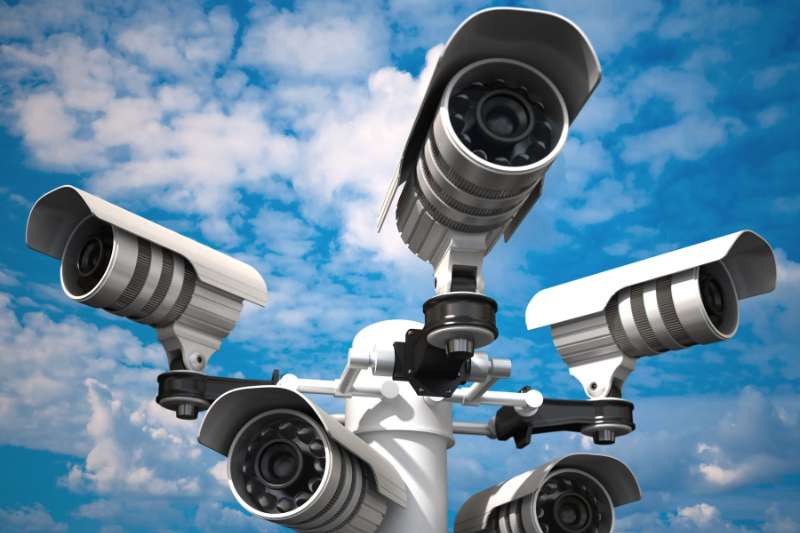
Construction sites are frequent targets for theft, vandalism, and unauthorized access. According to the National Equipment Register (NER) and the National Insurance Crime Bureau (NICB), construction equipment theft costs the U.S. construction industry hundreds of millions of dollars each year, and recovery rates remain relatively low. Because of this risk, choosing the right surveillance system for a large construction site is an essential part of protecting equipment, materials, and project timelines.
This guide explains how to select the best security camera solution for large construction environments, including key technical features, placement strategies, and security integration considerations.

Construction sites differ significantly from traditional commercial environments. Effective surveillance must address several unique challenges:
For these reasons, cameras designed for industrial outdoor monitoring are required rather than basic commercial indoor systems.
Large construction sites require cameras that can monitor expansive zones without creating blind spots.
Recommended options include:
These configurations allow security teams to cover larger spaces with fewer cameras.
The majority of theft incidents occur outside of working hours. Cameras must function effectively in darkness.
Look for systems that include:
Thermal cameras can detect human presence even in complete darkness or poor weather conditions.
Construction environments expose surveillance equipment to dust, debris, rain, and extreme temperatures.
The camera housing should meet IP66 or IP67 weather resistance ratings, indicating protection against water and dust intrusion. Industrial-grade construction helps ensure long-term reliability.
Early-stage construction sites often lack permanent electrical infrastructure.
Modern surveillance solutions may include:
These technologies allow cameras to be deployed quickly without running underground cables or installing temporary power lines.
Remote access allows site managers and security teams to monitor activity in real time.
Important features include:
Remote monitoring enables rapid response when suspicious activity occurs.
Advanced systems use intelligent motion detection to differentiate between:
Smart filtering helps reduce false alarms and ensures security teams focus on real threats.
Even high-quality cameras will fail if they are poorly positioned.
Effective surveillance planning usually focuses on these critical areas:
All vehicle and personnel access locations should be monitored.
High-value machinery and materials require dedicated surveillance.
Wide-angle cameras or PTZ systems should monitor the site perimeter.
Temporary structures, stacked materials, or terrain changes can create hidden areas that require additional coverage.
Conducting a site security assessment before installation helps determine the optimal layout.
Security cameras work best when integrated into a broader security strategy.
A comprehensive protection plan may include:
Combining surveillance technology with physical patrol services significantly improves theft prevention and incident response.
Choosing indoor cameras for outdoor environments
Outdoor durability is essential.
Underestimating storage requirements
High-resolution footage requires significant storage capacity.
Ignoring network connectivity needs
Cellular or backup communication systems may be necessary.
Installing too few cameras
Insufficient coverage creates blind spots that criminals can exploit.
Use cameras as both a monitoring system and a visible deterrent.
Placing clearly visible cameras near entry gates, equipment storage areas, and perimeter access points discourages opportunistic theft. When potential criminals know surveillance is active, they are far less likely to target the site.
PTZ cameras combined with wide-angle perimeter cameras are often the most effective solution. PTZ systems allow operators to monitor large areas dynamically while fixed cameras provide constant coverage of high-risk zones.
Many modern systems use cellular networks or local recording devices. While internet connectivity improves remote monitoring and alert capabilities, cameras can still operate without a permanent wired connection.
The number depends on site size, layout, and risk level. Large projects often require multiple cameras covering entry points, equipment areas, and perimeter zones to eliminate blind spots.
Selecting the right surveillance system for a large construction site requires balancing coverage, durability, power availability, and monitoring capabilities. When deployed strategically, security cameras can significantly reduce theft, protect valuable equipment, and improve overall site safety throughout the duration of the project.
24 Hours | 7 Days per Week
Metro Areas Across Washington State
If you need professional protection for your construction project, our team provides construction site security, patrol services, and surveillance monitoring designed for large job sites.
📞 (206) 434 - 1149
📧 globalsecp@gmail.com
Contact us today to discuss how we can help protect your construction site, equipment, and project timeline.